
Masterpieces of Buddhist Sculpture in South Korea

Updated: Sep 7
I hope everyone had a wonderful holiday season, and I wish you all a fantastic New Year!
I recently returned from an unforgettable 3.5 week journey across Asia that took me through South Korea, Hong Kong, China, and Japan. Along the way I visited an incredible variety of cities, including Seoul, Gyeongju, Hong Kong, Shenzhen, Hakone, Tokyo, and Sapporo.
Although this trip was primarily about reconnecting with family and friends, I also managed to visit many museums and cultural sites in each destination. I could easily spend hours talking about every stop on this journey, and many of the photos from Hong Kong, Shenzhen, and Japan are already featured elsewhere on my Instagram page @anthonywuart. For this blog, however, I wanted to focus on South Korea - a country I hadn't visited in over twelve years - and more specifically, the Buddhist sculpture of South Korea.
The highlight of my time in Korea was finally making the journey to Gyeongju, about a 2 hour and 15 minute ride from Seoul aboard the country's high-speed KTX train. Often referred to as 'the museum without walls,' Gyeongju served as the capital of the Silla Kingdom for nearly a thousand years, from 57 BC to AD 935. During this period, Silla unified much of the Korean Peninsula and became one of East Asia's great cultural and artistic centres. Today, the city is home to an extraordinary collection of royal tombs, temples, archaeological sites, and museums that preserve more than 1,500 years of Korean history.
Among the places I was most excited to visit were the Gyeongju National Museum and the magnificent Seokguram Grotto, a UNESCO World Heritage Site overlooking the East Sea. Constructed in the 8th century during the height of the Unified Silla Period, the grotto houses one of the finest Buddhist sculptures in Asia - a serene granite Buddha surrounded by exquisitely carved bodhisattvas and guardian figures. Widely regarded as one of the greatest masterpieces of Korean Buddhist art, it has been a destination I have dreamed of visiting for over a decade. Finally standing before this remarkable statue was every bit as memorable as I had imagined.
Korean Buddhist sculpture is relatively rare compared to the surviving traditions of China and Japan, making sites like Seokguram all the more significant. The artistry, craftsmanship, and spiritual presence of these works are truly inspiring. I'll conclude this blog with my return to Seoul, where I had the opportunity to revisit some of Korea's finest museums and admire an outstanding collection of Korean and Chinese masterpieces.

Image 1. Here I am heading towards the Gyeongju National Museum and passing by the earthen tombs of members from the Silla royal family.

Image 2a. The main entrance to the Gyeongju National Museum in the beautiful winter light.

Image 2b. The grounds of the Gyeongju National Museum. There are many vestiges from the Silla Kingdom on display including ceremonial stupas, architectural fragments and foundations, and Buddhist sculptures.

Image 2c. One of the outdoor highlights at the Gyeongju National Museum - a massive bronze Buddhist temple bell dedicated to King Seongdeok (reign 742-765) by his son King Gyeongdeok (reign 702-737). The bell is heavily inscribed and features relief details of scrolling florals and heavenly maidens. It is considered one of the most historically important bells in Korea.

Image 3a. Within the Gyeongju National Museum was one of the most impressive Korean bronze Buddhist sculptures I have ever seen. This is a life-size figure of Bhaishajyaguru Buddha (aka the Medicine Buddha) from circa 800 of the Silla Dynasty. This sculpture is considered a national treasure and endues a lot of grace in his pose with the gentle face and the flowing robes. There are traces of polychrome throughout too.

Image 3b. Another view of this beautiful Buddhist figure.

Image 4. Here is a much smaller Buddhist sculpture at the museum. This one is made of gilt bronze and stunning in its craftsmanship, especially the details in the mandorla (frame of light). This Buddha is dated to the 9th Century of the Silla Dynasty.

Image 5a. There are two fantastic limestone Silla Buddhist sculptures on the mezzanine level of the Gyeongju National Museum. The first was this 3 meter tall sculpture of Bhaishajyaguru Buddha.

Image 5b. The second of the impressive limestone figures is this pensive bodhisattva. Although a fragment, you can still see the unique design of this figure - he is seated cross-legged. (You will see what a complete type of this figure later in this blog).

Image 6a. The main reason for this trip to Gyeongju was to view the famous Seokguram Grotto, home to a 3.5 meter high granite carved figure of Buddha and a dedicated UNESCO World Heritage Site in 1995. Seated on a 1.5 meter high base, the Buddha depicted is the historical Buddha Shakyamuni and has a beautiful serene face. His right hand gestures towards the earth to witness his enlightenment, while the left hand is in the gesture of meditation. The walls are exquisitely carved with panels of bodhisattvas, enlightened beings who chose to remain on the earthly realm.
Seokguram Grotto is a 30 minute Uber ride from my hotel in Gyeongju, and after driving up a winding mountain road, you have to walk another 15 minutes to get to the entrance. The grotto overlooks a picturesque view of mountains and distant ocean.
This photo of the Buddha was something I found off the internet, since you were't allowed to take any pictures inside the building. Regardless, it was a magnificent experience to finally see this sculpture.

Image 6b. A view of the small shrine built during the 20th Century to protect the entranceway for the large granite Buddha.

Image 6c. I understood the reasoning why photos weren't allowed within the premises - the interior was actually quite cramped and could only fit about a dozen people. So what I ended up doing was buying a postcard of the Buddha from the gift shop and commemorating my visit in front of the entrance. This was definitely one of my most memorable visits to see a Buddhist site!

Image 7. When I returned to Seoul after my trip to Gyeongju, my next exciting visit was to the National Museum of Korea. This is the largest museum in South Korea and it has been a while since I was last here. In addition to showcasing numerous Korean national treasures, the museum also has a strong collection of Indian and Chinese artwork. Just note the museum is very busy, especially after lunchtime!

Image 8a. In this photo from the National Musuem of Korea are two of the most iconic bronze Buddhist sculptures. Like the limestone fragment we saw in Gyeongju, both portray a 'pensive bodhisattva' from the Silla Dynasty that are absorbed in quiet contemplation.
The image of a Buddhist figure deep in thought has its roots in the early traditions of Buddhist art that developed in South Asia and spread across Asia during the 2nd and 3rd centuries. The motif became especially important in China, Korea, and Japan, where artists gave it their own distinctive interpretations.
But 'pensive' may not fully capture what these figures express. They seem not simply lost in thought, but engaged in a profound act of contemplation. Looking at them, one cannot help but wonder what they are thinking - perhaps contemplating the nature of Buddhism, the suffering of humanity, the possibility of easing that suffering, or our place within the natural world. Their beauty lies partly in this mystery - the sense that they are quietly contemplating questions that remain timeless.

Image 8b. Detail of one of the famous Silla Dynasty pensive bodhisattvas at the museum. (This example is the more popular one)

Image 8c. Detail of the other famous Silla Dynasty pensive bodhisattva.

Image 9a. Also at National Museum of Korea was this incredible room gallery showcasing massive Buddhas. The figures shown here are made of stone and iron.

Image 9b. One of the large Buddhist sculptures from the gallery includes this Goreyo Dynasty cast iron figure of the historical Buddha Shakyamuni. He is seated in a meditative 'lotus' pose. Both hands are missing, but the right hand would be in the 'earth gesture' pose, while the other would be in meditation.

Image 10a. The decorative works in the museum showcased some of the masterpieces of Korean art history. Depicted here is their famous kundika vessel, which were ritual water vessels used by monks. This example is perhaps the most famous of this type. Made during the 12th Century of the Goryeo Dynasty, it has a bronze body inlaid with a very detailed landscape containing willow trees.

Image 10b. Another Goryeo masterpiece at the museum is this turtle-dragon shaped ewer. This example is incised with a 王 (king) character, impying it was made for the Imperial court.
The details and dynamism on this work is absolutely stunning. Dragon-turtles are supposed to be auspicious mythical beasts, and this example has a very well-detailed ferocious visage, with a gaping mouth that functions as the ewer's spout. The quality of the twisted-rope handle, incised delineation of the beast's scales and shell, as well as the gorgeous celadon glaze are also incredible.
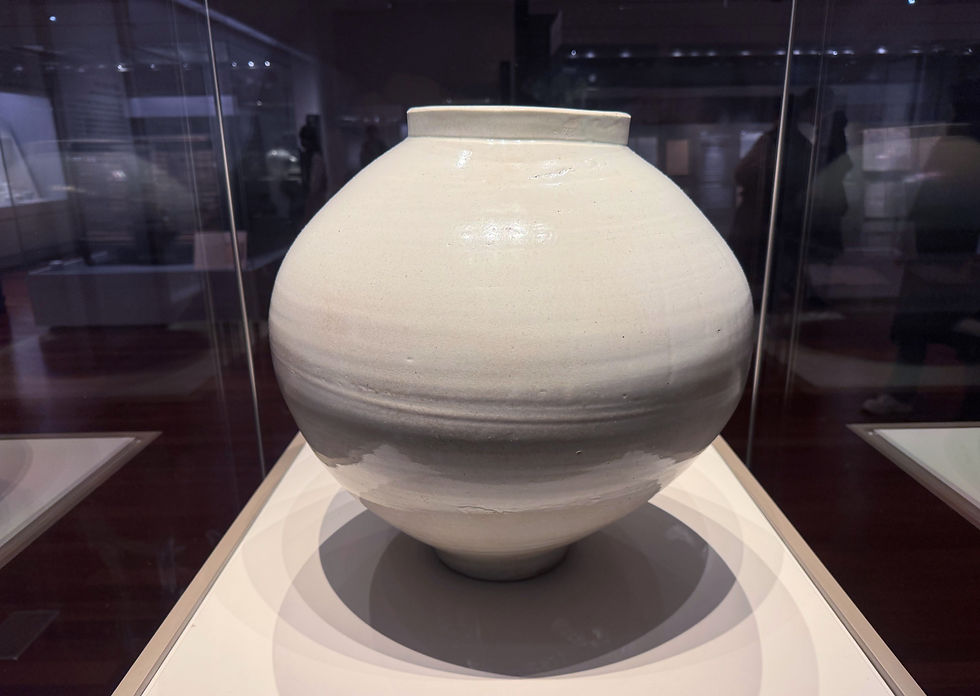
Image 10c. And finally, among the Korean masterpieces at the museum is this 18th Century Joseon Dynasty 'Moon Jar'. Uniquely Korean, moon jars (dalhangari) have become a national icon of Korean porcelain and have found their way into contemporary Korean pop culture.
Known for their impressive size of more than 40 cm high, moon jars embody the Neo-Confucian ideals of purity, modesty, and naturalness. Each jar is unique, with subtle variations in shape, gentle asymmetry, and even imperfections created during the firing process. These qualities are part of their beauty.
I’ve written about moon jars in past blogs, and whenever I see them featured in auction previews in New York, I’m struck by how highly they are valued. In recent years, exceptional examples have sold for more than USD 2 million, reflecting their growing status as some of the most sought-after works of Korean art.
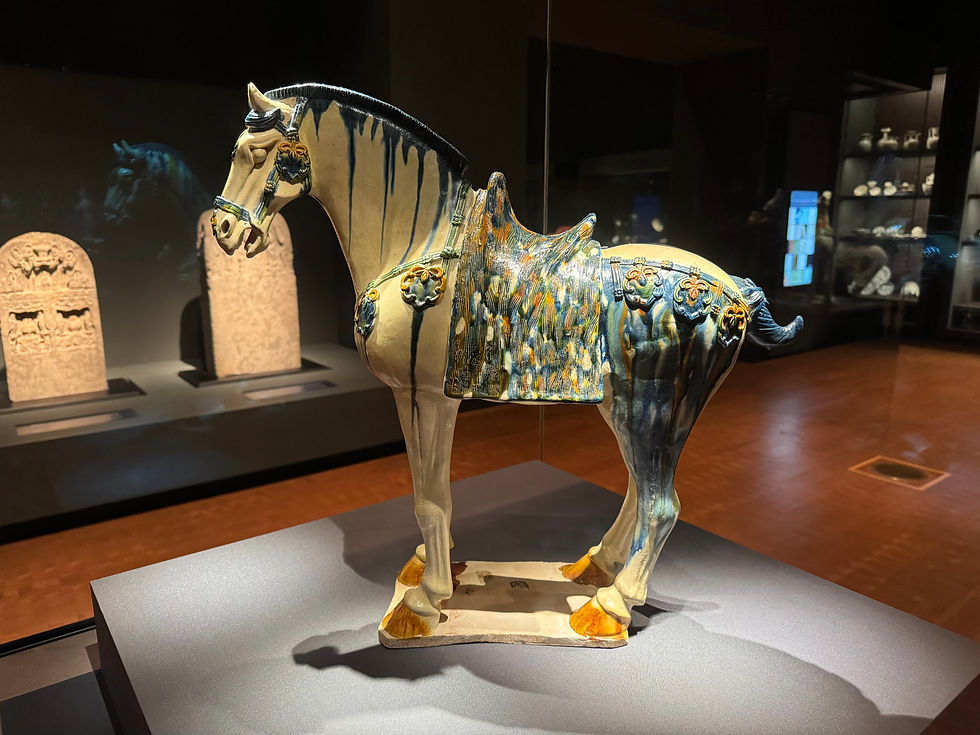
Image 11a. And since I mostly focus on Chinese works of art, I wanted to quickly showcase some of the highlights I saw at the National Museum of Korea. The majority of these pieces were purchased by the museum at Christie's Hong Kong between 2002-2004.
There were too many artworks to choose from so I selected a couple of my favourites, particularly examples that had Central and/or Middle Eastern influences.
The first item is a gorgeous Chinese sancai (three coloured) glazed horse from the Tang Dynasty (618-907). This is one of the best examples I have seen with respect to its form, glaze and musculature.
This horse has high amounts of cobalt blue in its glaze - an expensive mineral that had to be imported from the Middle East. It was probably buried with a wealthy noble, as this horse is on par with some of the famous examples from the Matsuoka Museum in Tokyo that I saw last summer.

Image 11b. In the Chinese porcelain category at the museum was this stunning and large Chinese blue and white 'grapes and vine' dish from the Yongle Period (1506-1525) of the Ming Dynasty (1368-1644). The rare design was used in Middle Eastern ceramics, and the theme of grapes symbolize abundance and prosperity. The quality of the cobalt blue is also very special.

Image 11d. Another Chinese blue and white highlight at the musem was a spectacular Yongle ewer. This shape derived from Persian metalware. The shape is most graceful, and it contains a difficult to fire spout and handle. The two peaches on the body symbolizes a wish to bestow longevity for its owner.

Image 11e. And finally at the National Museum of Korea is this Qing Dynasty (1644-1911) Chinese blue and white moonflask with a Qianlong mark and period (1736-1795) (that is unfortunately not visible). The form of this flask was inspired by Middle Eastern and Central Asian metal canteens used for camel caravans along the Silk Road.
However, this design has now been repurposed for Chinese Imperial Buddhist rituals - it is filled with many Chinese motifs such as the large lotus bloom bursting from the centre and the stylized lotus leaves contain the eight Buddhist emblems. Also present are the use of Chinese lingzhi (longevity fungus) around the base and neck. This is a very fascinating piece, especially since there are two related examples in my hometown of Toronto - at the Gardiner Museum and the Royal Ontario Museum!
Thank you very much for reading this blog and I hope everyone has an incredible 2026! I'll be starting my business travels again with a trip to Vancouver in the coming days, followed by a trip to Montreal. It's going to be a busy year filled with Asian art auctions and art appraisals, and hopefully it will be very fruitful! And please keep up with my Asian art adventures through my future website blogs and Instagram feed!


Comments