
CAD 1.65 Million Chinese Imperial Lacquer Cup Stand at Asian Art in London, November 2025

Updated: Jun 1
Immediately after selling the 1 million dollar Zhao Mengfu calligraphy album at Heffel in Toronto, I was on the plane again! This time it was a flight to the UK for their twice-annual Asian Art in London events.
Like Asia Week New York, Asian Art in London celebrates the art of China, Japan, Korea, the Himalayas, Southeast Asia and South Asia. It takes place twice a year - November and May - and in addition to local Asian art lovers, hundreds of international visitors will descend upon London to enjoy the various auction house previews, lectures, exhibition openings and dealer parties.
In this current blog I'll through some highlights from my November 2025 visit to Asian Art in London!

Image 1a. One of the most anticipated highlights this trip was a rare Chinese carved cinnabar lacquer 'dragon' bowl stand with a Yongle six-character mark and period (1406-1425). This piece is exceptional in its quality of carving and the details in the fierce confronting early Ming Dynasty dragons.
Cinnabar lacquer art forms are extremely difficult to produce (and time consuming!) since the artist would have to apply dozens of lacquer layers onto a surface before carving out the relief designs. Just waiting for a layer of lacquer to dry would take a lot of patience.
The 'dragon' bowl stand was offered at Bonhams in their sale of 'Priestley & Ferraro: Three Decades in Chinese Art (1994-2025)'. David Priestley is a well-known London dealer and after many years of working in the Chinese antique trade, has decided to retire. This bowl stand was one of the most recognized pieces from his gallery. It was offered at a reasonable auction estimate of GBP 350,000/500,00 (approximately CAD 651,000/930,000) and realized GBP 889,400 (approximately CAD 1.65 million) including auction fees.

Image 1b. The six-character reign mark incised to the bowl stand's edge 大明永樂年製 daming Yongle nianzhi (made during the Yongle reign of the Ming Dynasty).
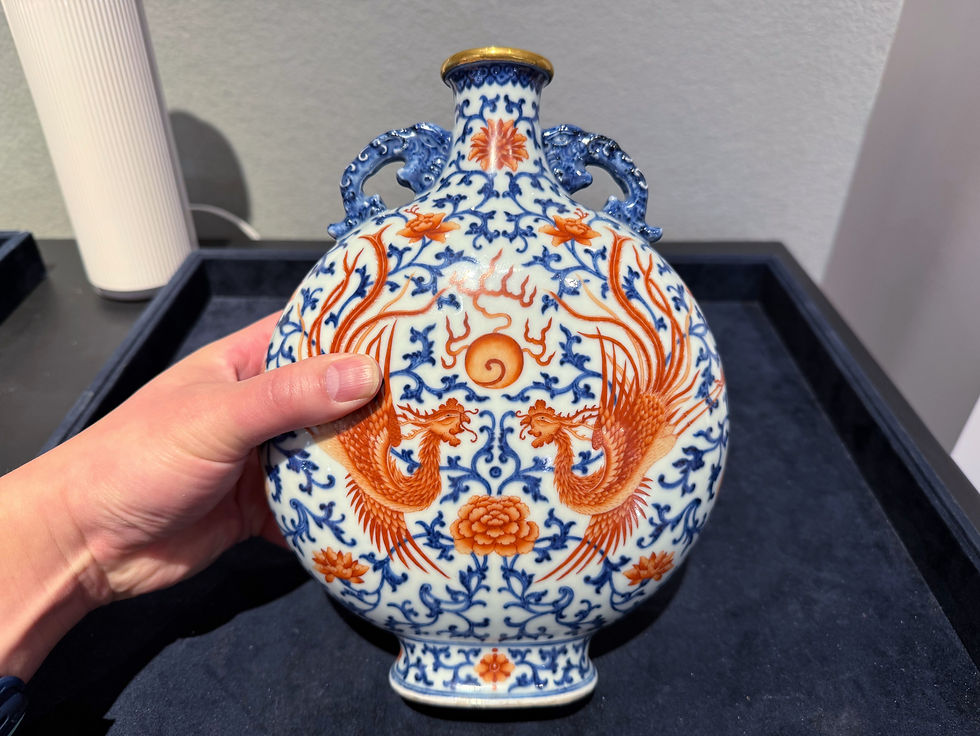
Image 2a. Another highlight piece at Bonhams was this Chinese blue, white and iron red porcelain moonflask with Qianlong six-character mark and period (1736-1795).
This flask was delicate in its size and had an attractive design of two confronting phoenixes amongst peony blooms, lotus and flaming pearls of wisdom. In addition I also really liked the two cobalt blue monster handles. This vessel sold for GBP 279,800 (approximately CAD 520,000) against a very conservative estimate of GBP 30,000/50,000 (approximately CAD 55,800/93,000).

Image 2b. The six-character reign mark in underglaze blue for this flask 大清乾隆年製 daqing Qianlong nianzhi (made during the Qianlong reign of the Qing Dynasty).
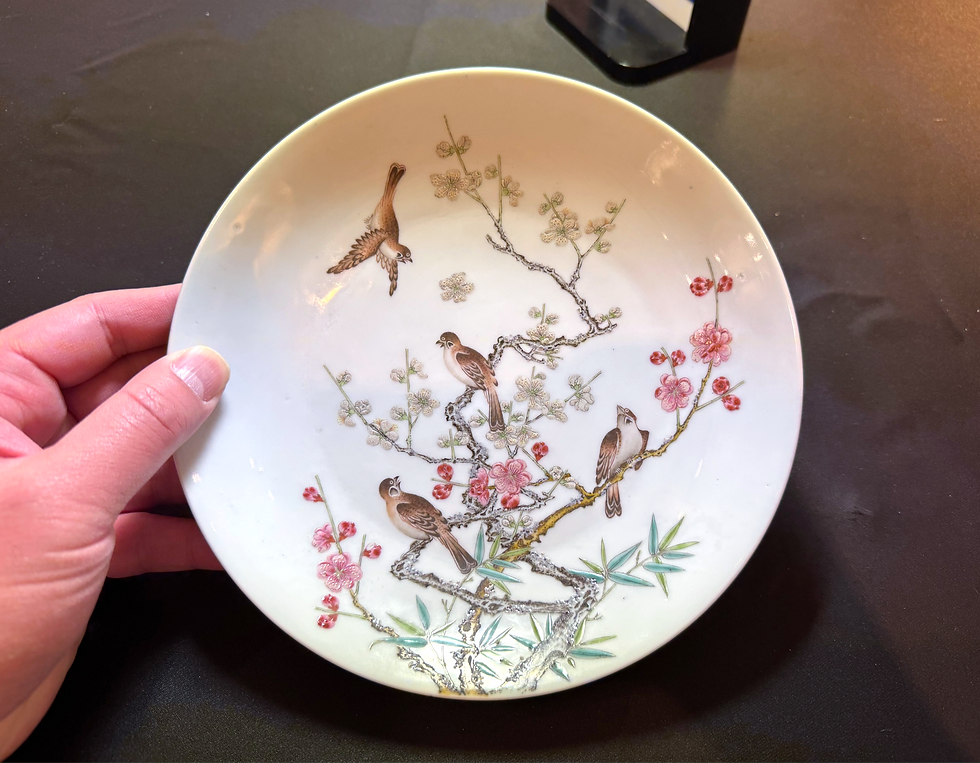
Image 3a. Over at Christie's London was a very good selection of Chinese export porcelain, Imperial porcelain and works of art. These were all part of their Arts of Asia online sale, since the company is starting to present auctions of Asian art in their London galleries again.
One of the most interesting pieces I handled from this sale was a Chinese famille rose 'bird' dish with Yongzheng mark and period (1723-1735). It came from the prestigious R. H. R. Palmer Collection and had a rare design of multiple birds perched on branches of bamboo and prunus. The dish was estimated at GBP 80,000/120,000 (approximately CAD 149,000/223,000) and ended up selling for GBP 120,650 (approximately CAD 225,000).

Image 3b. The dish's six-character reign mark in underglaze blue 大清雍正年製 daqing Yongzheng nianzhi (made during the Yongzheng reign of the Qing Dynasty). You can also see the rare black enamelling and an old Oriental Ceramic Society exhibition label - more reasons why this dish was so appealing.

Image 4. Another spectacular piece at Christie's was this large Chinese cloisonné enamel censer, supported by three legs constructed of cloisonné enamel red-crowned cranes. This piece was a sight to behold and represents some of the best cloisonné works produced during the Qianlong reign (1736-1795).
The censer's body contains an attractive scene of lotus pads and florals, with birds flying in the background. It is flanked by two fierce dragon ormolu-mounted handles and a reticulated dragon final. This amazing censer realized GBP 63,000 (approximately CAD 117,000), just below the auction estimate of GBP 80,000/120,000 (approximately CAD 149,000/223,000).

Image 5. Up the street from Christie's was the Sotheby's London gallery. Greeting visitors before you enter the Chinese gallery was a massive bronze ritual vessel from the Late Shang to Early Western Zhou Dynasty (11th-9th Century BCE). This bronze vessel had been published and was once exhibited at The Art Museum at Chinese University, Hong Kong in 2009. Against an estimate of GBP 600,000/1,000,000 (approximately CAD 1.12/1.86 million ) it sold for GBP 762,000 (approximately CAD 1.417 million).

Image 6a. One porcelain dish I admired at Sotheby's was a large Chinese blue and white 'floral' dish from the Yongle Period (1406-1425). The quality of the 'heaping and piling' in the blue enamels were quite stunning, as well as the design of waves on the flattened rim edge. I found the estimate to be quite conservative at GBP 100,000/200,000 (approximately CAD 186,000/372,000), but ultimately many interested bidders pushed it up to a final price of GBP 304,800 (approximately CAD 565,000).

Image 6b. The reverse of this beautiful Yongle 'floral' dish at Sotheby's London.

Image 7a. Also at Sotheby's London was this blue and white 'fruit' vase from the Yongzheng period (1723-1735), with an auction estimate of GBP 60,000/80,000 (approximately CAD 112,000/149,000).
This piece was much-examined during the auction preview since it pays homage to blue and white examples from the Ming Dynasty's Yongle period. It didn't feature a reign mark, so many of us were trying to differentiate why this was considered an early 18th Century piece as opposed to an early 15th Century example. In the end it did sell for quite a high price at GBP 622,300 (approximately CAD 1.16 million), which suggests that some people might have thought it was from the Yongle period.

Image 7b. The base of the blue and white 'fruit' vase at Sotheby's London.

Image 8a. At Sotheby's London I was also very impressed with the quality and details of this Imperial Chinese kesi panel with the Buddhist bodhisattva Puxian. Kesi translates to 'cut silk' and this panel was actually formed from numerous pieces of multi-coloured silk stitched together. There's just so much to look at including the deity himself, the elephant and attendants, and all the jewelled ornaments throughout the work.
This kesi panel was sold to benefit George Watson's College in Edinburgh and was estimated at GBP 150,000/250,000 (approximately CAD 279,000/465,000). There was much interest in the panel, and after a lengthy bidding battle, realized GBP 355,600 (approximately CAD 661,000).

Image 8b. All the wonderful details in this incredible Imperial Chinese silk kesi panel.

Image 9a. Sotheby's London also featured an online sale titled 'Asian Art/ 5000 Years, including property from the Nitta Collection' to complement their main sale of Chinese art. Some of the Himalayan bronzes were really something special - like this large Kashmiri silver-inlaid copper alloy figure of Shakyamuni Buddha, from the 10th/ 11th Century.
This figure of the historical Shakyamuni Buddha has a good size and is graceful in his contrapposto (counter-balance) pose. Despite losses to the right hand, the figure still managed to sell for GBP 254,000 (approximately CAD 472,440) against an estimate of GBP 200,00/300,000 (approximately CAD 372,000/558,000).

Image 9b. Detail of the Buddha's face where you can see the wonderul casting of the lips, nose and ears, as well as the use of silver inlays in his eyes and urna (third eye).

Image 10a. Also at the Sotheby’s online auction was a selection of Buddhist sculptures from the descendants of Nitta Muneichi (1912–2006). Born in Taiwan as Peng Kaidong, Nitta moved to Japan at a young age, where he became a very successful businessman. During the 1950s, he began collecting all types of Buddhist bronze sculptures, amassing one of the finest collections in the world. A large selection of his works has appeared at auction, and many of his most notable pieces were donated to the National Palace Museum in Taipei.
There are still a scattering of his bronzes that appear at auction from time to time, and among the items his descendants consigned to Sotheby’s, this Kashmiri silver-and-copper-inlaid copper alloy figure of Shakyamuni Buddha from the 7th/8th century stood out as the finest. It is a wonderful surviving example of early Kashmiri Buddhist sculpture, with beautifully preserved details in the face, hand gestures, and lotus throne.
The estimate of GBP 80,000/150,000 (approximately CAD 149,000/279,000) was quite reasonable when compared to its final realized price of GBP 241,300 (approximately CAD 448,000).

Image 10b. The reverse of this incredible figure of Shakyamuni Buddha from Kashmir.
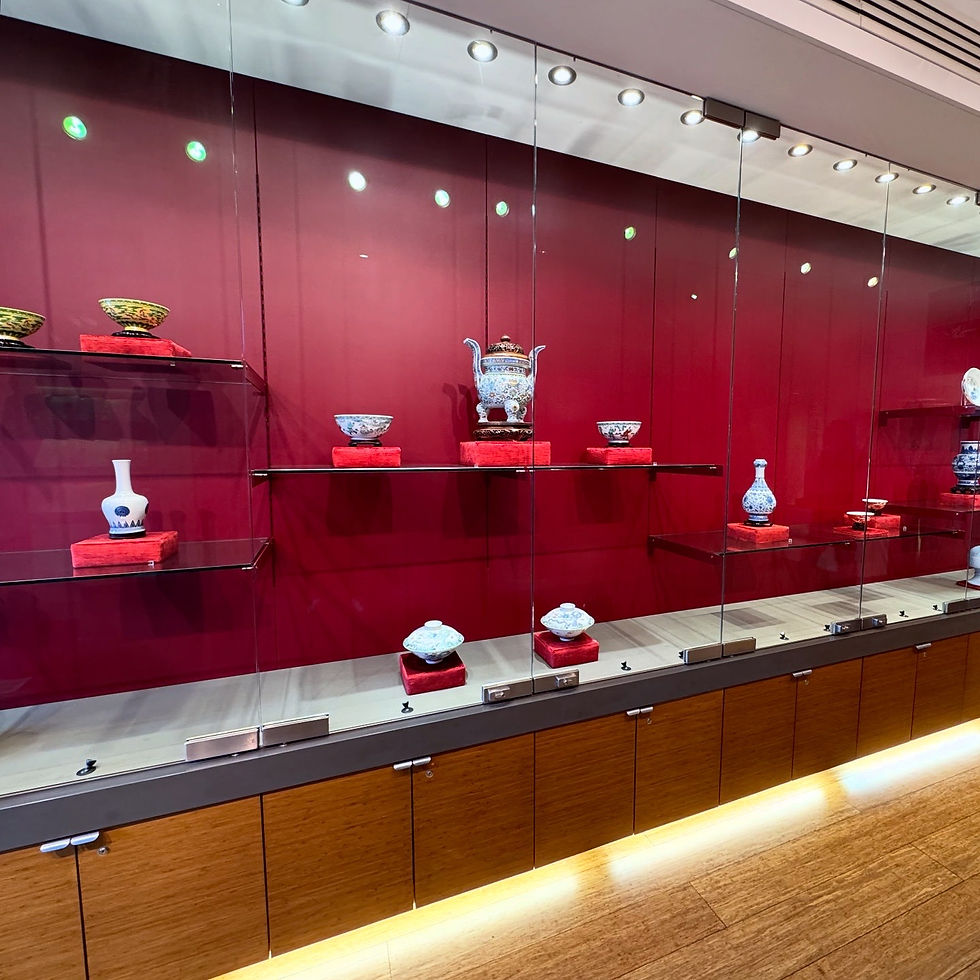
Image 11a. A trip to Asian Art in London would never be complete with visiting some of the major Chinese art dealer galleries! My first stop was to check out 'The Centenary Exhibition' at Marchant which featured 30 objects from the Kangxi, Yongzheng and Qianlong reigns. A selection of porcelain items exhibited can be seen in the above photo.
Marchant has been one of the most prestigious galleries selling Chinese art since the beginning of the 20th Century, and always have some of the best porcelain pieces to offer. 'The Centenary Exhibition' coincides with their new book launch of 'One Hundred Years', a two volume history of their important family business. Notably, this is also Marchant's last exhibition at the current Kensington Church Street location before they move to a new Mayfair gallery in 2026.

Image 11b. A photo of myself with Stuart Marchant, the third generation dealer of the Marchant family antique business. We are holding copies of the new exhibition catalogues which weigh a combined total of 10 Kg!

Image 11c. Stuart was kind enough to let me examine the star piece of the exhibition, a Chinese Imperial blue and white garlic head vase with Yongzheng mark and period (1723-1735). This piece is exquisite with its elegant shape and gorgeous painting, and there are only a handful of similar examples in existence. It was purchased by Stuart's father, Richard Marchant, in 1965.

Image 11d. The blue and white vase's six-character reign 大清雍正年製 daqing Yongzheng nianzhi (made during the Yongzheng reign of the Qing Dynasty).
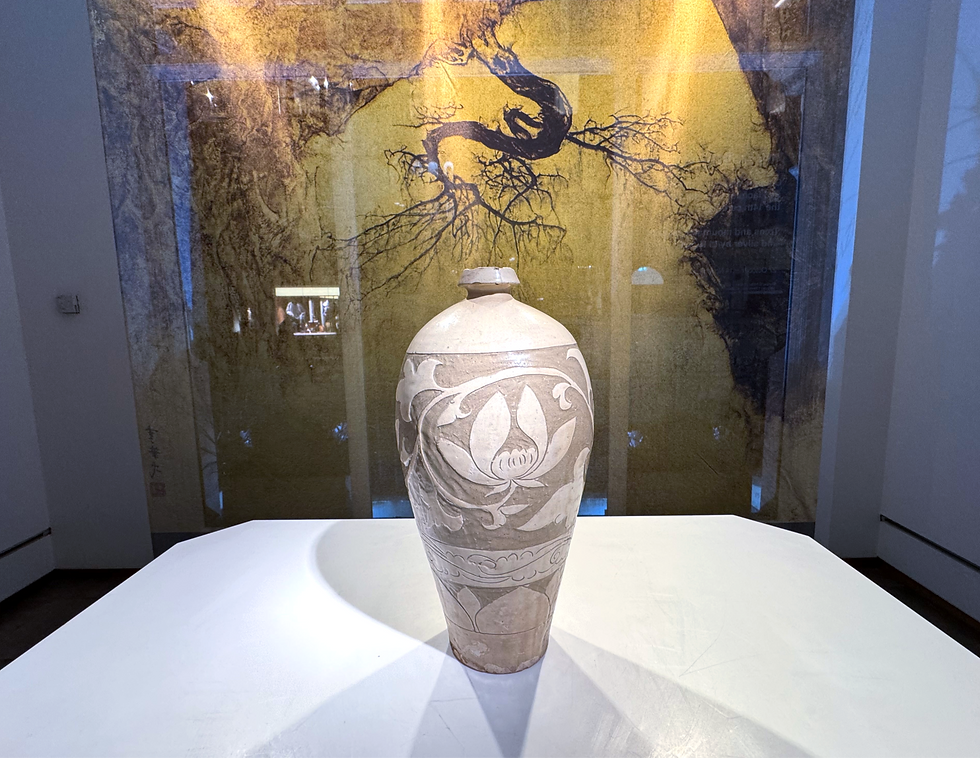
Image 12a. Over at Eskenazi, another of London's prestigious Chinese art galleries, they were hosting their new show 'Chinese Ceramics, Metalwork and Lacquer from the 12th to 14th Century'. This exhibition featured 12 Chinese objects crafted from material like ceramic, lacquer and gold.
The item shown here is a Cizhou stoneware vase from the 12th/13th Century of the Jin Dynasty. It is in a an elongated meiping (plum blossom) form and has a pleasant carved design of lotus floras and scrolling vines.

Image 12b. Also part of the exhibition was a beautiful Jun yao stoneware dish, also from the 12th/13th Century of the Jin dynasty. In addition to the wonderful shape, the soft blue glaze and contrasting large purple splashes are truly stunning.

Image 12c. And finally from the Eskenazi exhibition was a rare Jian 'hare's fur' stoneware tea bowl and lacquer cup stand from the Southern Song Dynasty (1127-1279). This set came from an old Japanese collection and had all the associated elmwood storage boxes. The tea bowl itself is well-potted, of a good size, and also contains a rare hare's fur glazing in the exterior and interior. The lacquer cup stand too is of a similar shape and function to the Yongle example I first talked about in this blog.
Thank you for reading this current blog and for following my Asian art adventures over the years! My December looks to be quite busy already with a trip to San Francisco and New York at the beginning of the month, followed by a three-week trip to Asia that will take me to South Korea, Hong Kong and Japan. Please stay updated with my travels by visiting my Instagram feed @anthonywuart.


Comments